
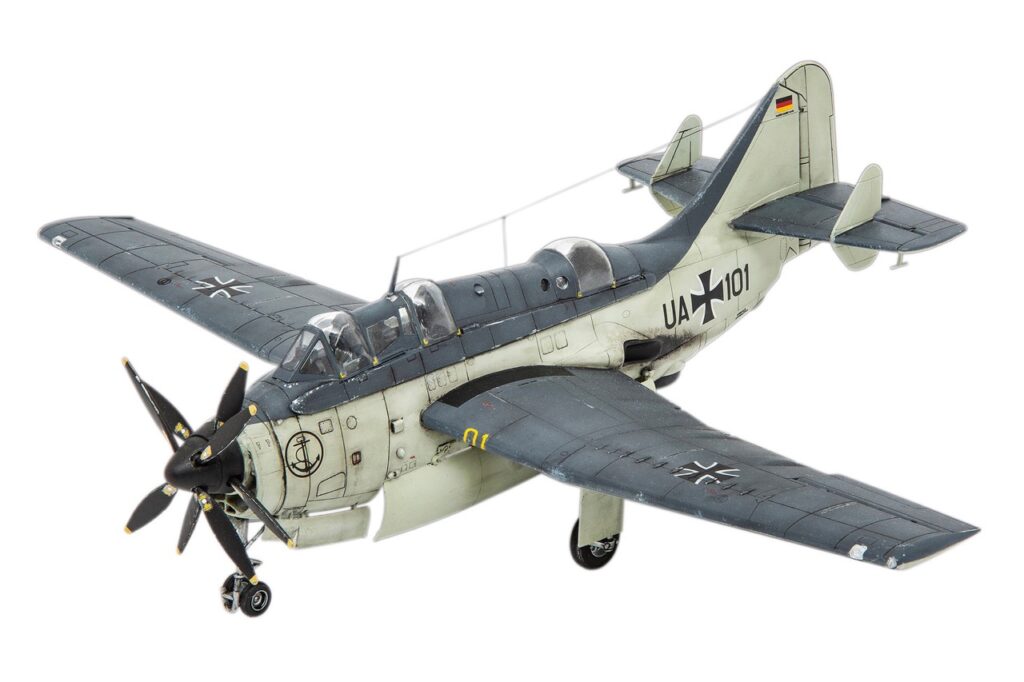
If you are looking for an extraordinary model building project that combines technology, history, and a touch of British eccentricity, you can’t go past the Fairey Gannet AS.1/AS.4. Few other aircraft divide opinions as much as this striking anti-submarine aircraft with its folded wings and distinctive double turboprop powerplant.
In this article, we will dive together into the exciting history of the Gannet, discover anecdotes from its operational life, highlight appearances outside the cockpit, and compare the original with the model kit – so you are perfectly prepared for your next building project, which you can order directly here in the Revell Shop.
From Concept to Flying Submarine Hunter
The story of the Fairey Gannet begins shortly after the Second World War. The Royal Navy was looking for a modern, carrier-based aircraft that could both detect and combat submarines – at a time when the threat from Soviet submarines was rapidly increasing. Fairey Aviation subsequently developed the Gannet, which took off for the first time in 1949 and was officially commissioned in 1953.
What makes the Gannet so special is its propulsion: two Armstrong Siddeley Mamba turboprops were combined into a “Double Mamba,” which drove two contra-rotating propellers via a common gearbox. This made it possible to shut down one of the two engines in flight to save fuel – a real innovation and a clear advantage for operations at sea. The Gannet was robust, had a long range, and could carry an impressive armament: bombs, depth charges, rockets, and acoustic torpedoes were available.
Operational Service and Variety of Versions
The Gannet AS.1 and AS.4 were the main variants for anti-submarine warfare. While the AS.1 was the first production version, the AS.4 featured a more powerful engine and modernized electronics. A total of 348 Gannets were built, serving not only with the Royal Navy but also with the Australian, German, and Indonesian navies. In Germany, the Gannet was the first anti-submarine aircraft of the naval air arm from 1958 to 1966, before being replaced by the Breguet Atlantic.
Over time, further variants were developed, such as the Gannet AEW.3 as an airborne early warning platform with a large radome under the fuselage. The Gannet was so versatile that it was also converted for training and transport duties.
Anecdotes from Everyday Flying
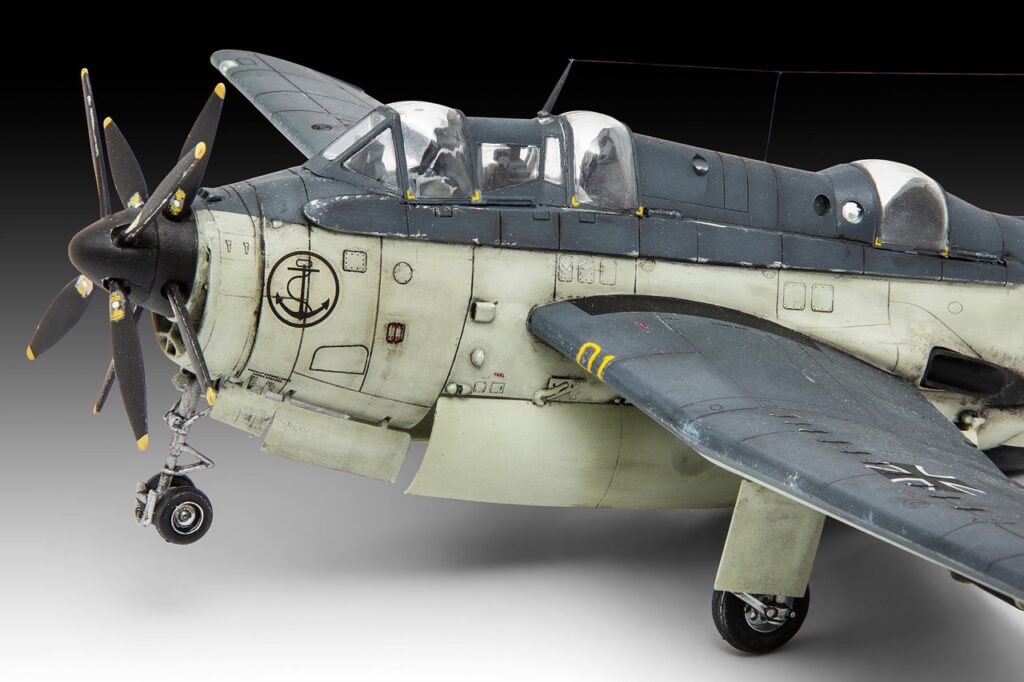
The Gannet was legendary not only because of its appearance, but also for its spectacular airshows. Particularly popular was the demonstration in which the aircraft thundered low over the airfield with only one engine running, arrestor hook extended, bomb bays open, and radome lowered. However, this maneuver once ended in disaster: a pilot forgot to select the correct setting before lowering the landing gear, which led to a serious accident – after that, such demonstrations were banned by the Royal Australian Navy.
Another highlight was the famous “One-Wing Salute”: during an admiralty inspection, an ingenious technician deactivated the wing folding mechanism on the left side of all aircraft. As the Gannets taxied past the admiral, all right wings folded up in sync – an unusual but apparently very effective salute, which earned the squadron top marks.
The Gannet in Pop Culture and Museums
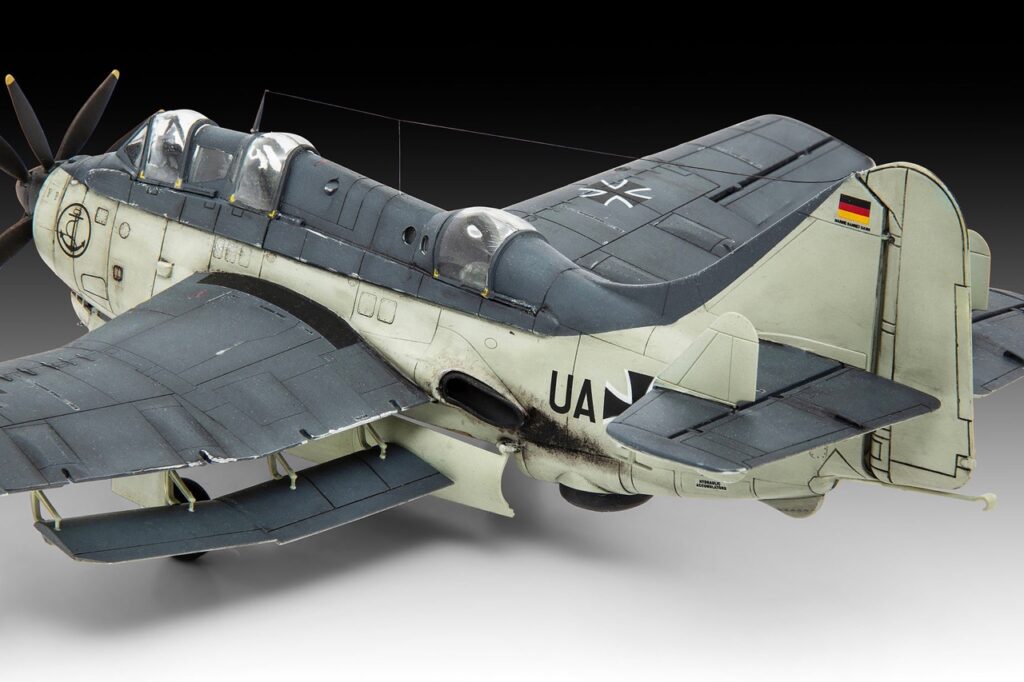
Although the Gannet never became a star of the big screen, it can now be admired in numerous museums around the world – from Australia to Germany to the USA, where one example is even still airworthy and lovingly called “Janet.” In literature and TV documentaries about the Royal Navy and the Cold War, the Gannet repeatedly appears as a symbol of British naval aviation in the 1950s and 1960s.
Technology that Inspires – The Original in Detail
The Gannet was a typical child of its time – large, heavy, but optimized for carrier operations. With a length of about 13.6 meters, a wingspan of 16.6 meters, and a maximum take-off weight of just under nine tons, it was anything but dainty. The three-man crew – pilot, observer, and electronics officer – sat in separate cockpits with excellent visibility. The wings could be folded in a distinctive Z-shape to stow the aircraft compactly below deck.
The armament ranged from torpedoes and depth charges to unguided rockets. The Gannet could combat both surfaced and submerged submarines and was equipped with state-of-the-art electronics for target acquisition.
The Model Kit – Technology and History in 1:72 Scale
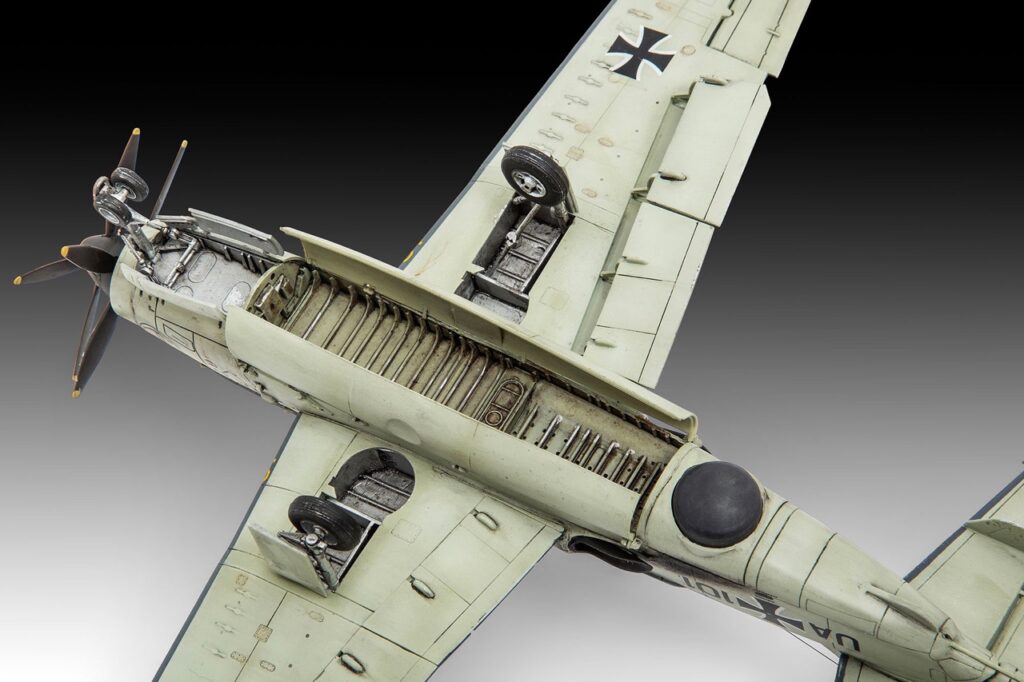
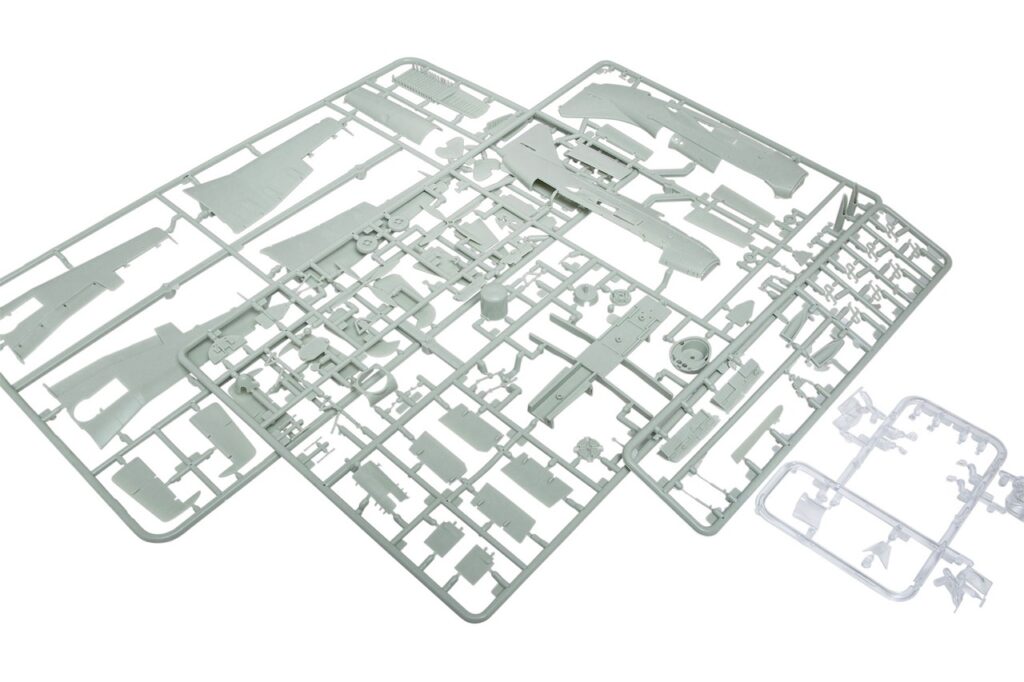
For you as model builders, the Fairey Gannet AS.1/AS.4 kit in 1:72 scale offers the perfect opportunity to recreate this fascinating aircraft in detail. With a length of 18.7 cm and a height of 5.8 cm, the model is handy but large enough to showcase all the fine details. The kit is aimed at experienced hobbyists aged 12 and up and, with 120 individual parts at level 4, offers a challenging build. Particularly noteworthy are the scale reproduction of the cockpit with finely crafted details and realistic instrumentation. The authentic weapons bay precisely represents the anti-submarine equipment, and movable control surfaces allow for a dynamic presentation of your model. You can display the canopy either open or closed, which provides additional options for individual scenes.
A Must for Lovers of British Eccentricity
The Fairey Gannet AS.1/AS.4 is much more than just another postwar aircraft. It stands for British engineering, creative problem-solving, and a good dose of character. Whether as a model on your workbench or as the original in a museum – the Gannet tells stories of innovation, courage, and a very special kind of humor that even found its way into the rough everyday life of naval aviators. If you choose this model, you are bringing a piece of living aviation history into your home – and plenty of conversation material for your next model building session!
Inspirations for Building
As always, we have put together some inspiring content for you: