
If you deal with World War II aircraft models, you already know the Bf 109 as a permanent fixture on the workbench. Yet the Revell edition of the Messerschmitt Bf109G‑10 „Erla“ in 1:32 scale is something special, as it revives one of the last and at the same time most technically mature Gustav variants and presents it in a form that will appeal both to experienced model builders and to motivated beginners.
Bf109 G10 Erla at the Revell Shop
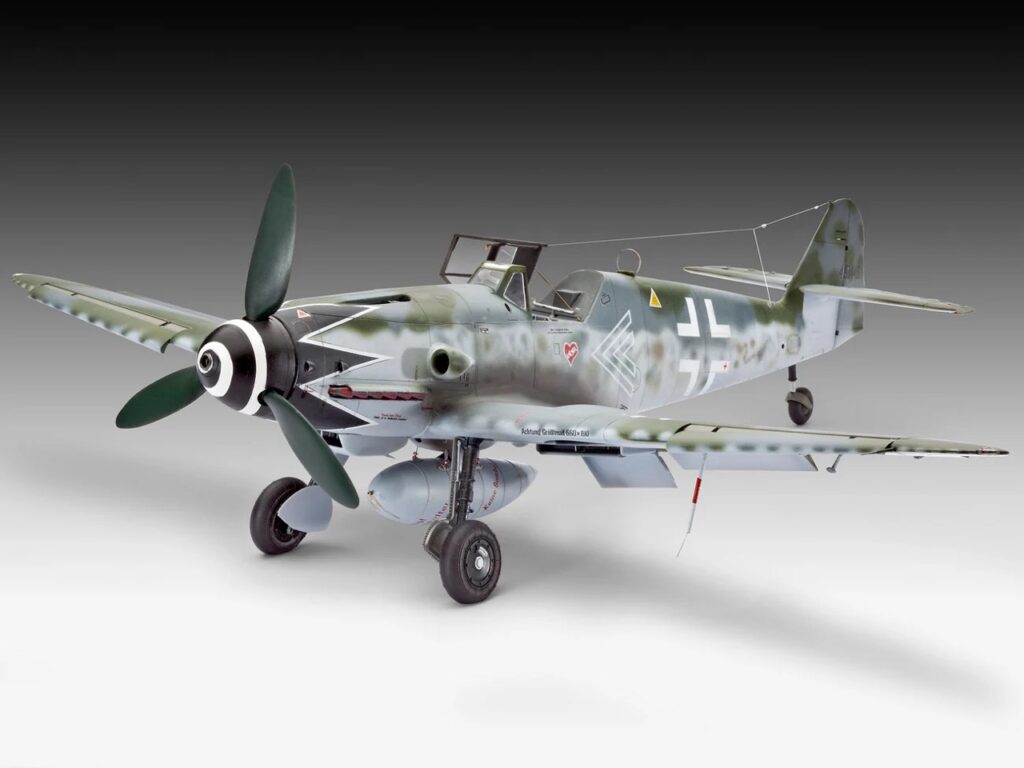
What makes the Bf109G‑10 „Erla“ historically special?
The Bf109G‑10 is formally still a Gustav, but in content terms it already stands at the threshold of the last major new development, the Bf109K series. It came about when the DB‑605‑D engines for the K series were not yet available in sufficient numbers and were instead installed in existing G fuselages, at Erla in Leipzig as a new production variant, not merely as a retrofit project. In Luftwaffe documentation it sometimes appears somewhat mockingly as a „bastard aircraft“, because it breaks the line of the pure G series while at the same time forming the basis for the final Gustav operations.
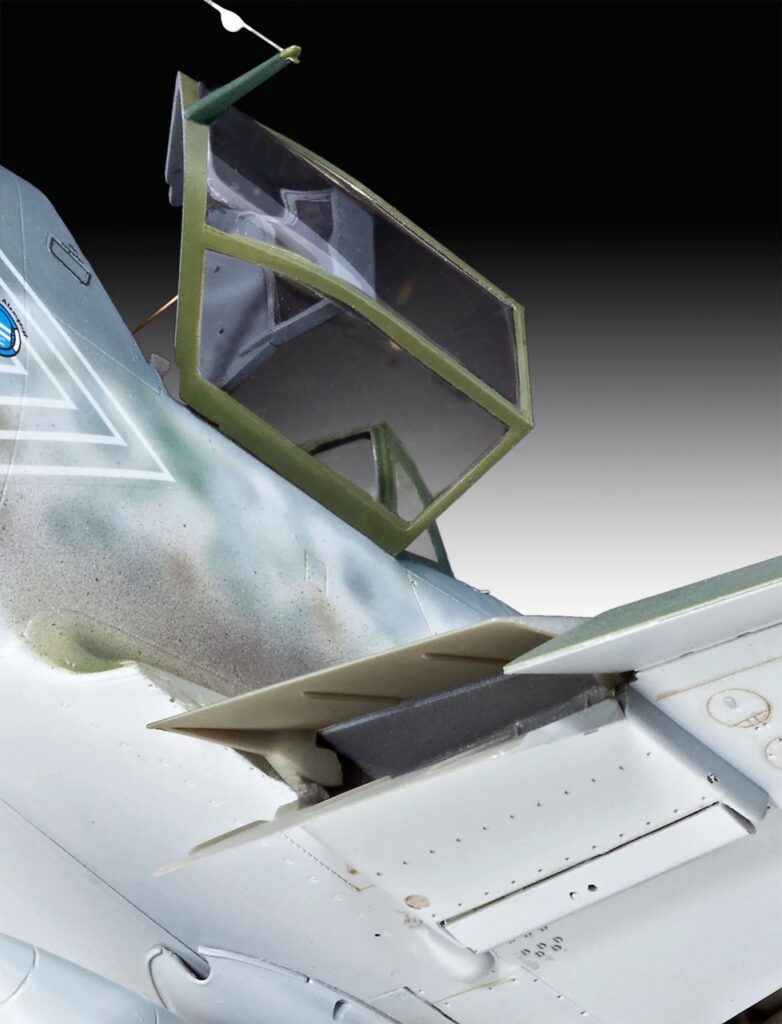
The „Erla production“ is characterized in particular by an improved, largely smooth fuselage shape and the so‑called Erla hood, a large, almost round canopy with better all‑round visibility. This hood is sometimes wrongly called a „Galland hood“, but in fact it is the standard solution that later also became standard on subsequent variants. Added to this are a taller wooden vertical tail, enlarged ailerons and a slightly modified landing gear, which both visually and aerodynamically define the image of a late, very fast 109.
Bf109 G10 Erla at the Revell Shop
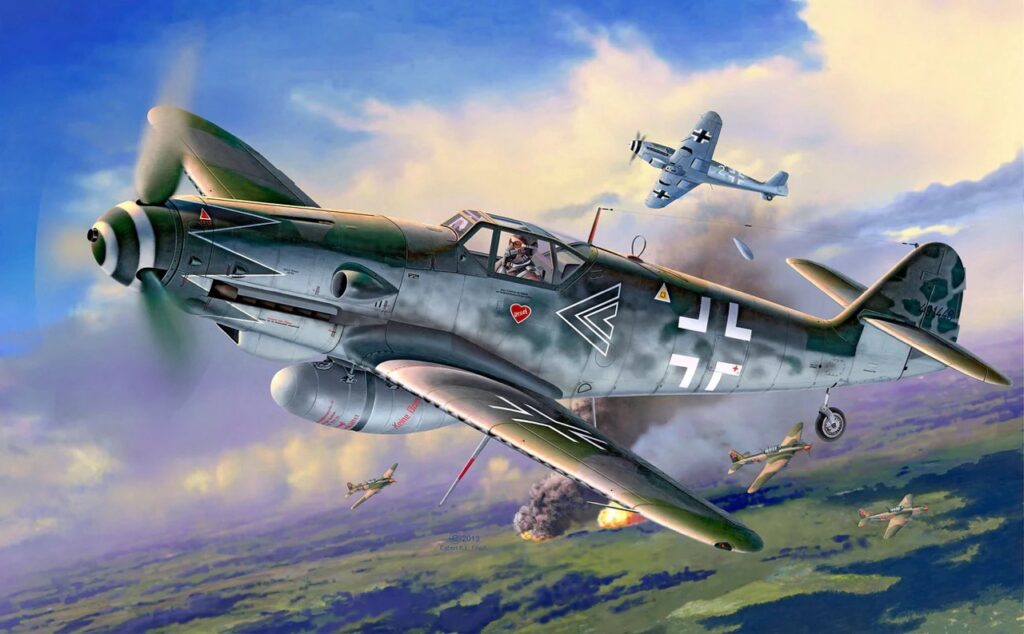
Historical deployments and pilot legends
The Bf109G‑10 entered series production from autumn 1944 and was thus one of the last new fighter aircraft that the Luftwaffe still received in appreciable numbers. It served mainly on the western and southern theatres of war, for example with JG 300, which as a „Wilde Sau“ night‑fighter unit initially operated against British bombers and later also flew against US bomber formations by day. On the eastern European front sector, late G‑10s encountered Soviet fighters and attack aircraft over the battlefields around Hungary and Romania and remained in service until the end of the war.
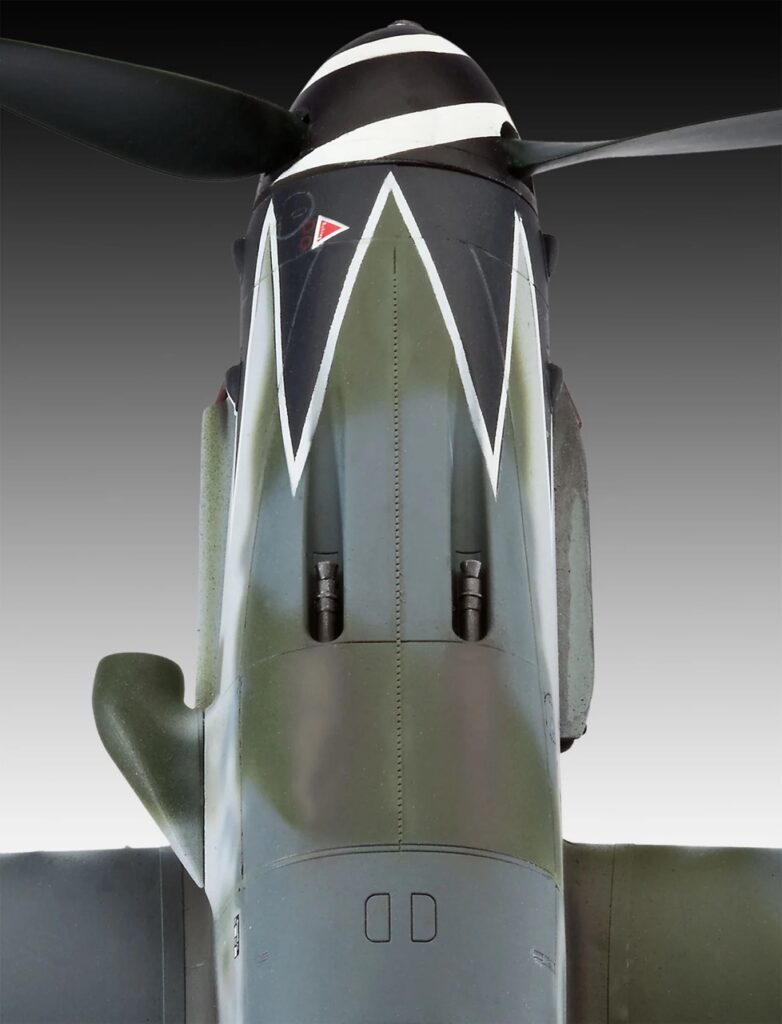
For many model builders, the connection to Erich Hartmann is a special attraction. The „Ace of Aces“ with over 350 aerial victories flew mainly Bf109G variants in his final war years and was later associated with a Bf109G‑10 from Erla production that he flew with JG 52. Revell picks up on this connection directly: one of the two paint schemes in our kit shows an aircraft with the typical markings and the white arrow pattern assigned to Hartmann’s aircraft.
The Bf109 as a type is of course omnipresent in films and series, from „Battle of Britain“ through „The Bunker“ to modern documentaries and feature films about the air war. Specifically, the G‑10 variant appears mainly in documentaries and museum films, for example when historical Bf109G‑10 examples from museum collections are presented. Some model and aviation YouTube channels also show replicas or 1:1 restorations of Bf109G‑10 aircraft, including some that refer to Hartmann’s late period of operations.
In specialist literature, the G‑10 variants appear in numerous Bf109 monographs and detail books, for example in works that explicitly deal with the „Gustav“ versions. There you will find detailed photographs, drawings and variant overviews that help you to tailor your Revell G‑10 even more precisely to a specific squadron or operational location.
Bf109 G10 Erla at the Revell Shop
The Revell kit in detail and what to expect on your workbench
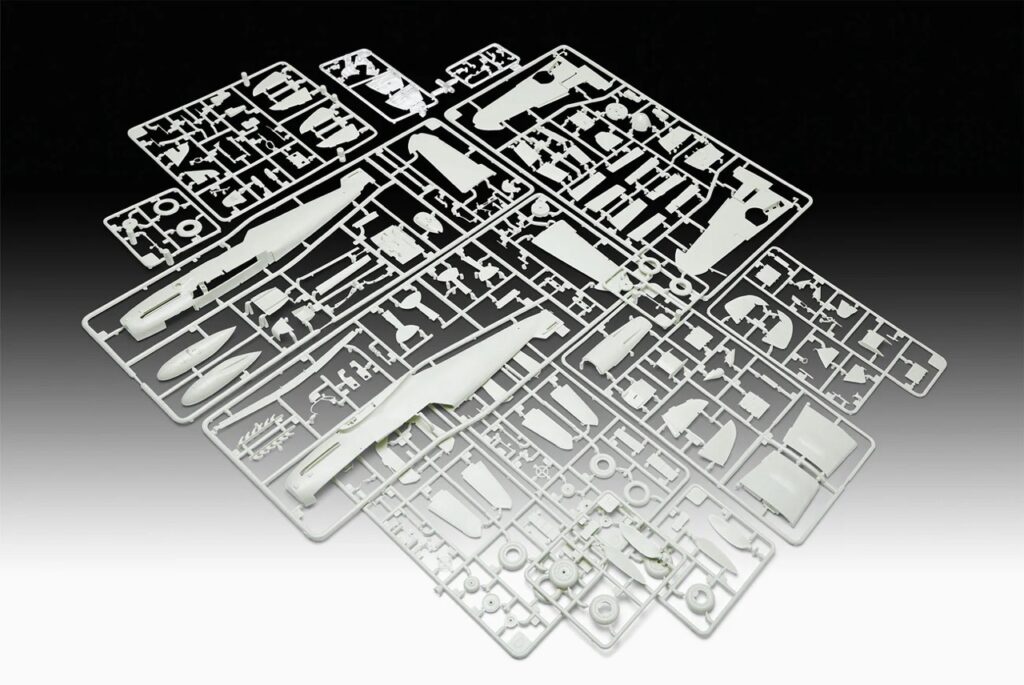
Our model kit of the Messerschmitt Bf109G‑10 „Erla“ in 1:32 scale comprises 147 individual parts and is classified as difficulty level 5, clearly aimed at model builders who have already completed a few 1:32 projects but do not yet need to be professional precision mechanics. A length of about 28.4 cm and a wingspan of about 31 cm make the model an impressive piece for the display case without appearing completely oversized.
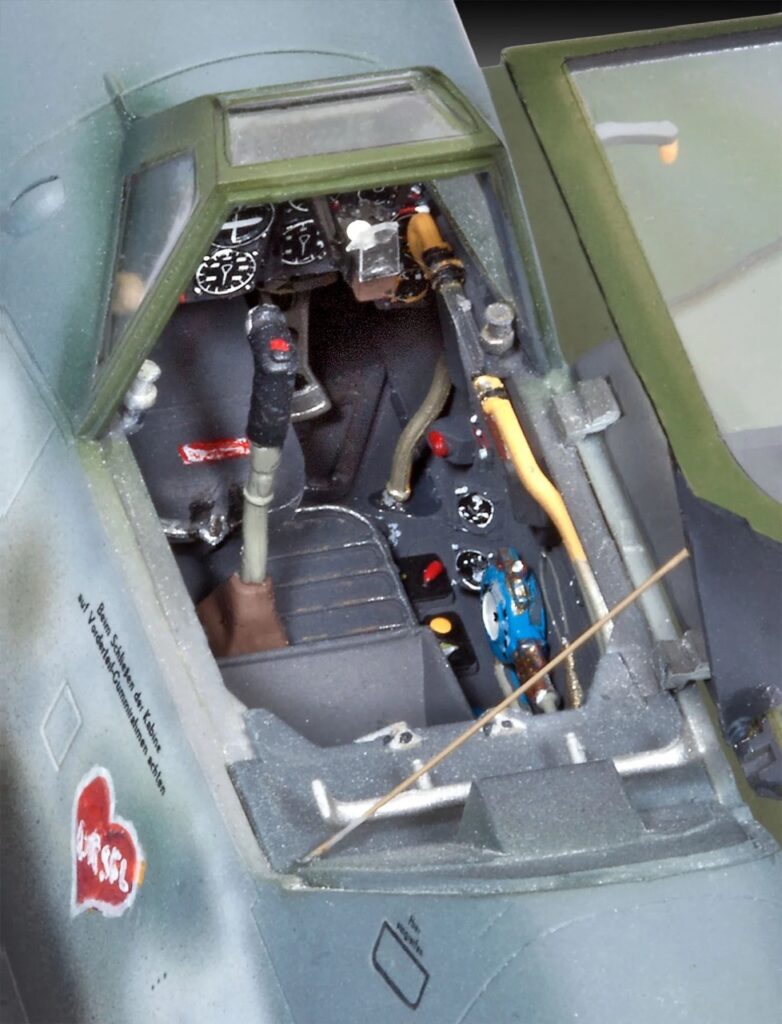
The cockpit is one of the kit’s strongest points: it consists of around 19 parts and forms a detailed „canopy cabin“ with instrument panel, seat belts and struts. If you wish, you can add extra seat belts or photo‑etched details, but even in the standard configuration a very convincing interior is created that immediately catches the eye when you look through the canopy.
The movable control surfaces ailerons, elevators and rudder are designed so that you can depict the aircraft either with neutral or slightly angled surfaces. The landing gear can be shown either retracted or extended; separate parts are provided for the landing gear doors, so that you can present your Bf109 either ready for take‑off or for landing.
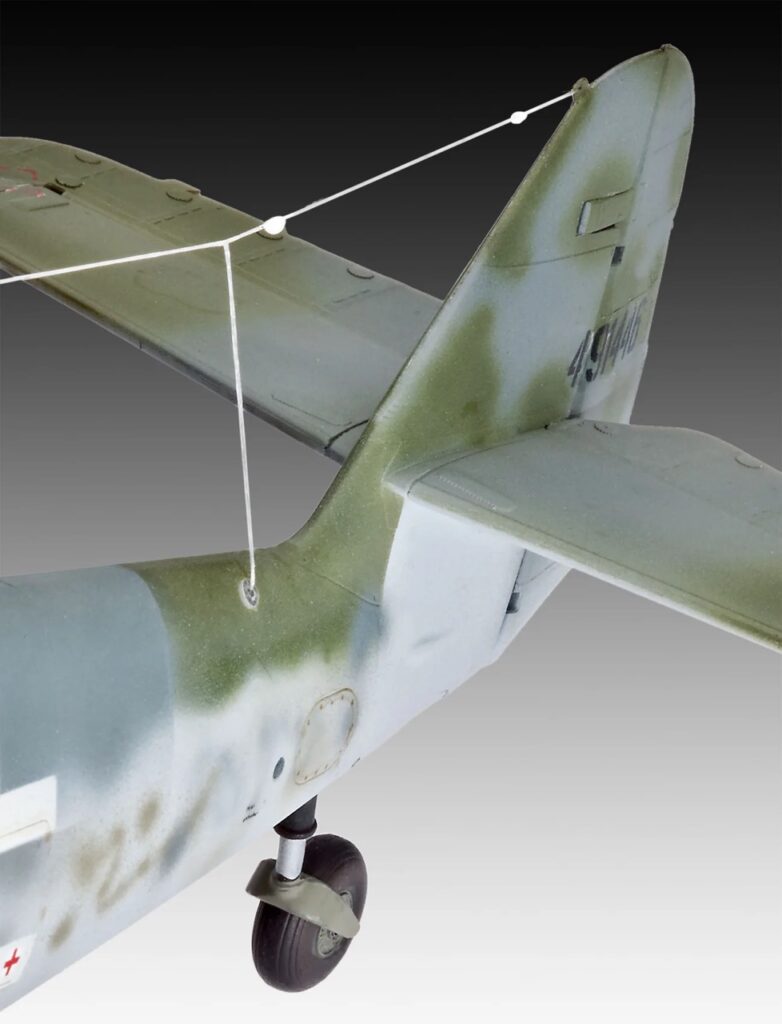
In the kit you will find two paint schemes that take you directly into the late war years. One of these is the already mentioned aircraft with white arrows and markings reminiscent of Erich Hartmann’s aircraft. The second variant shows a Bf109G‑10 from JG 300 that operated over Germany in the final months of the war against US bomber formations and is equipped with a rather plain but very characteristic camouflage and marking scheme.
Both variants use the typical curves of the Erla hood and the taller vertical tail, so that you can consciously notice how the late Gustav versions differ visually from earlier G‑6 models. If you like, you can also attempt your own interpretation, for example a hypothetical „Erla‑G‑10“ in a different squadron or with individual squadron lettering derived from photographs and specialist literature.
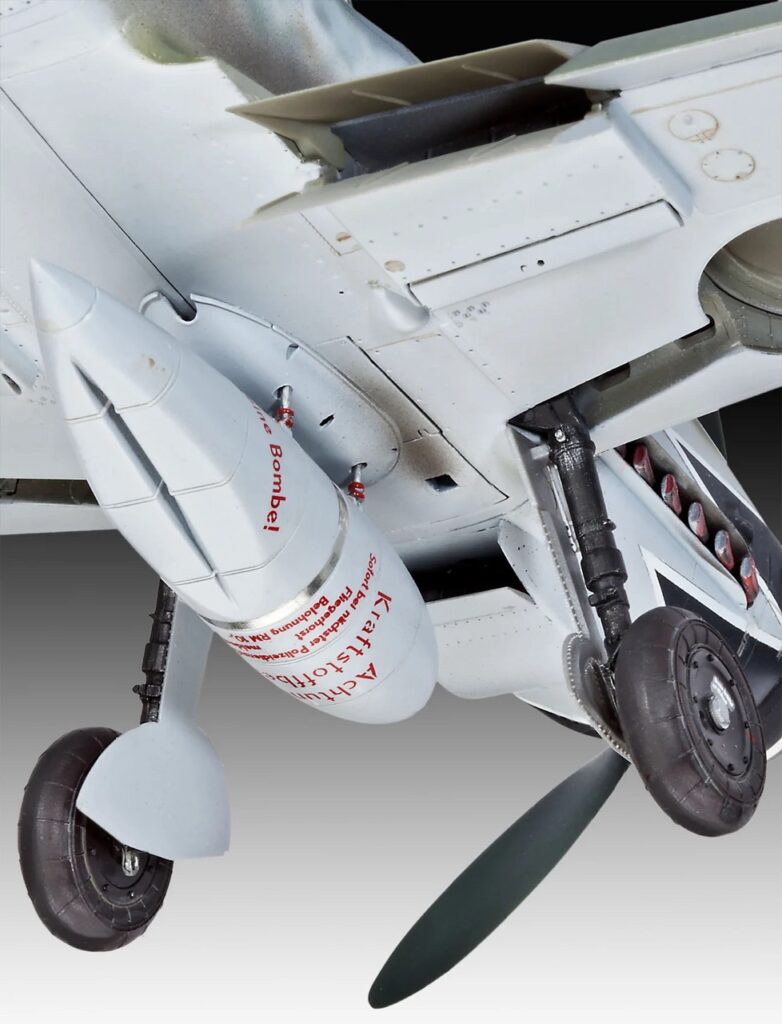
The Messerschmitt Bf109G‑10 „Erla“ is based on production at the Erla works in Leipzig, which from 1944 assembled new G‑10 fuselages with the powerful DB‑605‑D engines. This combination of proven fuselage and modern engine made the G‑10 one of the fastest Gustav variants ever flown and it is regarded by many enthusiasts as one of the last genuine top‑class fighter aircraft of the Luftwaffe.
Our Revell kit is a reissue of the first version that appeared in 2014 and benefits from experience we have since gathered with other 1:32 aircraft. The instruction manual is in the typical Revell style, with clear step‑by‑step illustrations and a complete parts overview, so that you can also find your way easily through more complex steps.
Bf109 G10 Erla at the Revell Shop
Why this Bf109G‑10 „Erla“ deserves a fixed place in your display case
For us as model builders, the Revell Bf109G‑10 „Erla“ is a project that elegantly combines technology, history and aesthetics. You are not just building another 109 model, but an aircraft that stands at the threshold between the Gustav era and the last major development line. The connection to legendary pilots such as Erich Hartmann, the operational history with JG 300 and the presence in museums and documentaries make the G‑10 an aircraft that you will discover anew every time you paint and display it.
Whether you opt for the Hartmann variant with its striking white arrows or prefer the rather plain but atmospherically strong JG‑300 aircraft, the Revell Bf109G‑10 „Erla“ in 1:32 scale is a project that is worth your time if you feel like tackling a demanding but well‑thought‑out 1:32 aircraft.
https://revell.com/products/messerschmitt-bf109g-10-erla
Inspiration for building