
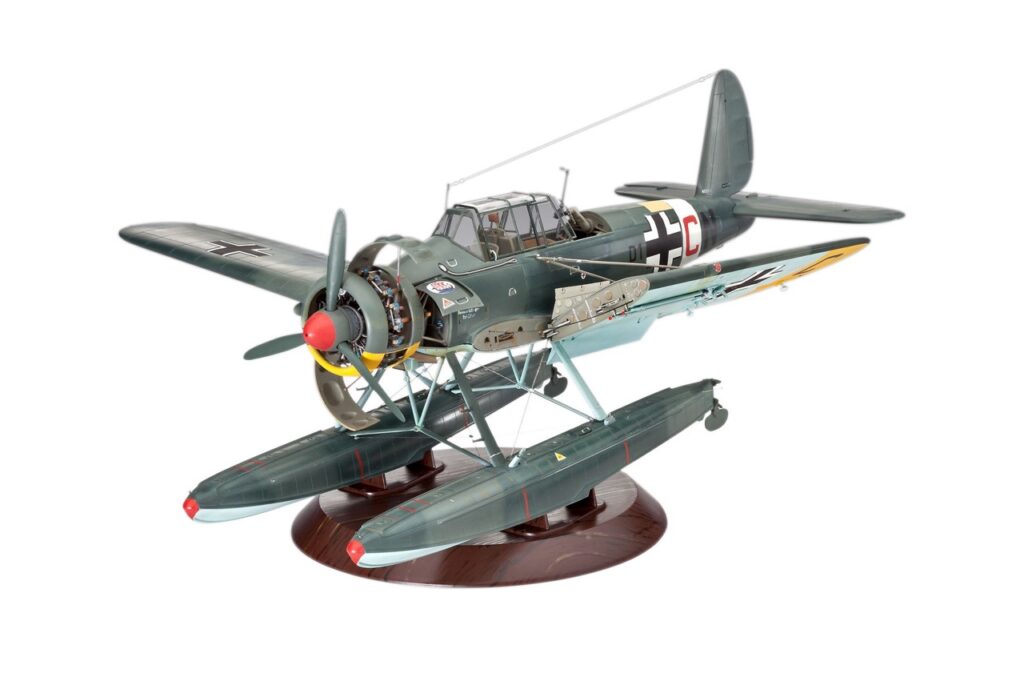
If you are looking for a historically significant and technically fascinating model in the field of aircraft modeling, you will find great joy in the Arado Ar 196A-3 (Revell Shop link). This German seaplane not only stands for the innovation and versatility of aircraft development during World War II but is also an absolute eye-catcher on any display – whether as a standalone piece or integrated part of a maritime diorama.
The Origin of the Arado Ar 196
The development history of the Arado Ar 196 began in 1936 when the German Kriegsmarine sought a modern shipboard aircraft to replace the Heinkel He 60. While other manufacturers continued producing biplanes, Arado opted for an innovative low-wing monoplane design with floats. After a design phase and extensive testing, the Arado design ultimately outperformed the competition, and production and trials began in the late 1930s. By 1939, the Ar 196 was commissioned as the standard catapult-launched aircraft on the most important warships of the German Navy.
The Role in World War II
Its nickname “The Eyes of the Kriegsmarine” is no coincidence: Whether on famous battleships like the Bismarck, Tirpitz, or Admiral Graf Spee, the Ar 196 provided reconnaissance, anti-submarine warfare, and convoy protection. In 1940, it notably contributed to the capture of the British submarine HMS Seal. Besides reconnaissance and attacks on sea targets, it was also used for supply missions and even for the rescue of shipwreck survivors. Its reputation grew to the point that it was considered the best maritime reconnaissance aircraft of the era and was highly valued by many crews. 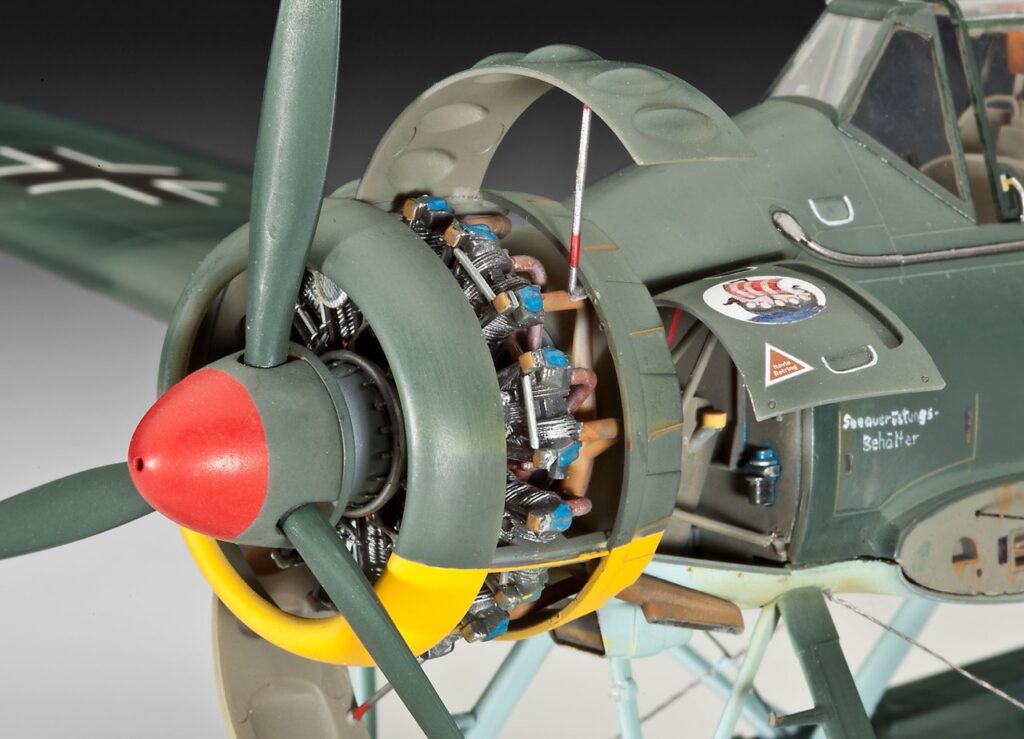
However, the Ar 196A-3 also flew outside German units: it served at times with the air forces of Finland, Bulgaria, Romania, the Soviet Union, and Norway. Some of the aircraft were even used post-war, such as in Romania and the USSR well into the 1950s.
Technical Features and Operational Range
What makes the Ar 196A-3 so special for modelers are the numerous technical details and variants. The aircraft was robustly built, equipped with twin floats, and could be launched from ship catapults. Wing twisting (wing warp) and flight performance allowed operation even in adverse weather conditions, from temperate coasts to rough sea areas. 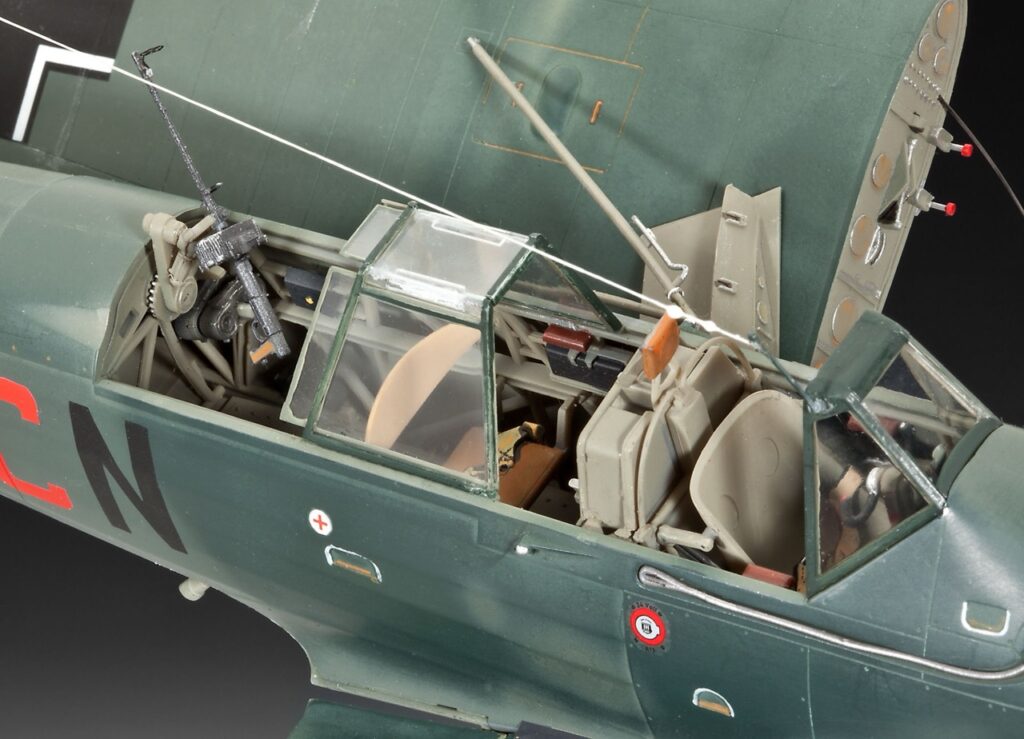
Its armament is also noteworthy: besides two 20mm MG-FF cannons, it featured an MG 17 machine gun in the nose as well as optionally bombs or additional machine guns. This gave the Ar 196A-3 an unusually high offensive capability for a seaplane of its time. Particularly interesting was the so-called “antenna breaker device,” with which Arado crews could cut the position-reporting antennas of ships in waters with heavy commercial traffic—a clever but little-known tactic.
Historical Anecdotes and Special Events
Among its most legendary operations is certainly the already mentioned capture of HMS Seal, where two Ar 196s located the British submarine in the Kattegat on May 5, 1940, until supporting vehicles of the German Navy arrived. Ar 196 aircraft were also active in the Pacific and Atlantic, sometimes operating with false or no markings to conceal their activities. 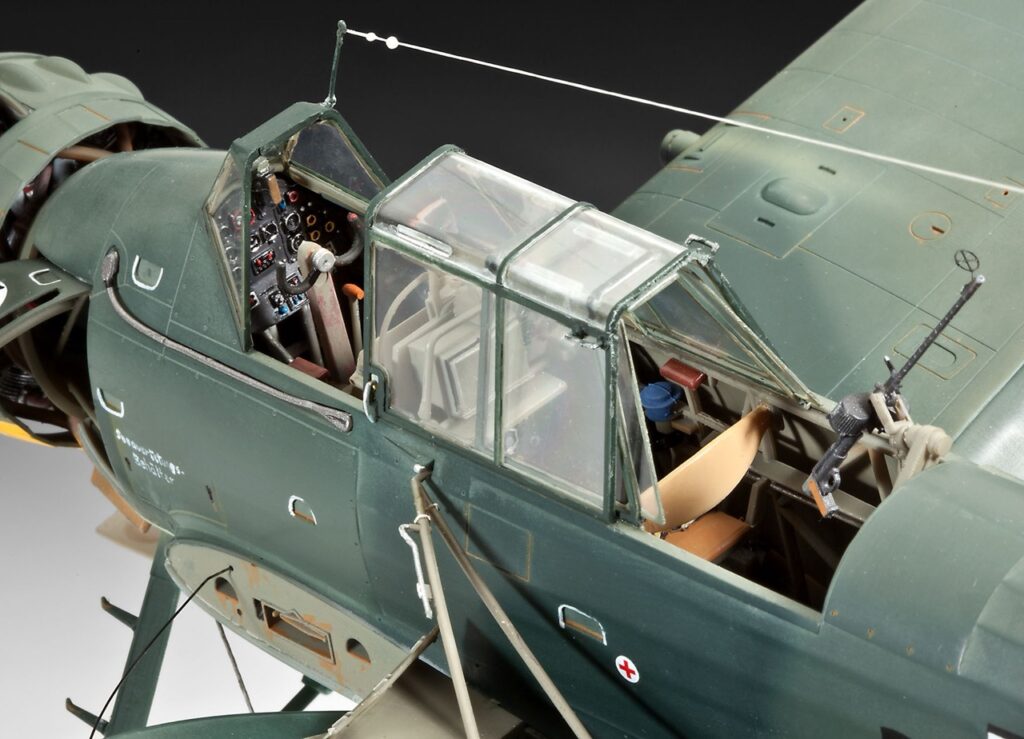
A somewhat eerie-mystical aspect is also associated with the Ar 196 found in a trawl net: in 1982, a wreck of a presumed Ar 196A-3 was recovered off the Greek island of Irakleia at a depth of 91 meters. Today, only a few specimens remain worldwide, mostly preserved as museum pieces.
Appearances of the Arado Ar 196A-3 in Games
While direct film appearances of the original are rare, the Ar 196A-3 often appears as a model or digitized version in documentaries and history programs as well as in flight simulation games like “War Thunder” or “IL2 Sturmovik.” Especially for modelers and gamers, it is exciting to “fly” the aircraft virtually or recreate it on dioramas—always accompanied by the unique look and feel of a German seaplane.
Modeling Tips & Context for the Revell Kit
In the 1:32 scale, you get a true classic with the Revell kit. Thanks to the generous size of almost 35 cm in length and nearly 14 cm in height, the 192 parts can be assembled with enormous attention to detail. For advanced modelers, supplementing with photo-etched parts and specific accessories is worthwhile to make hinges, cockpit instruments, or waterlining more realistic—especially if you plan a diorama with a water base. 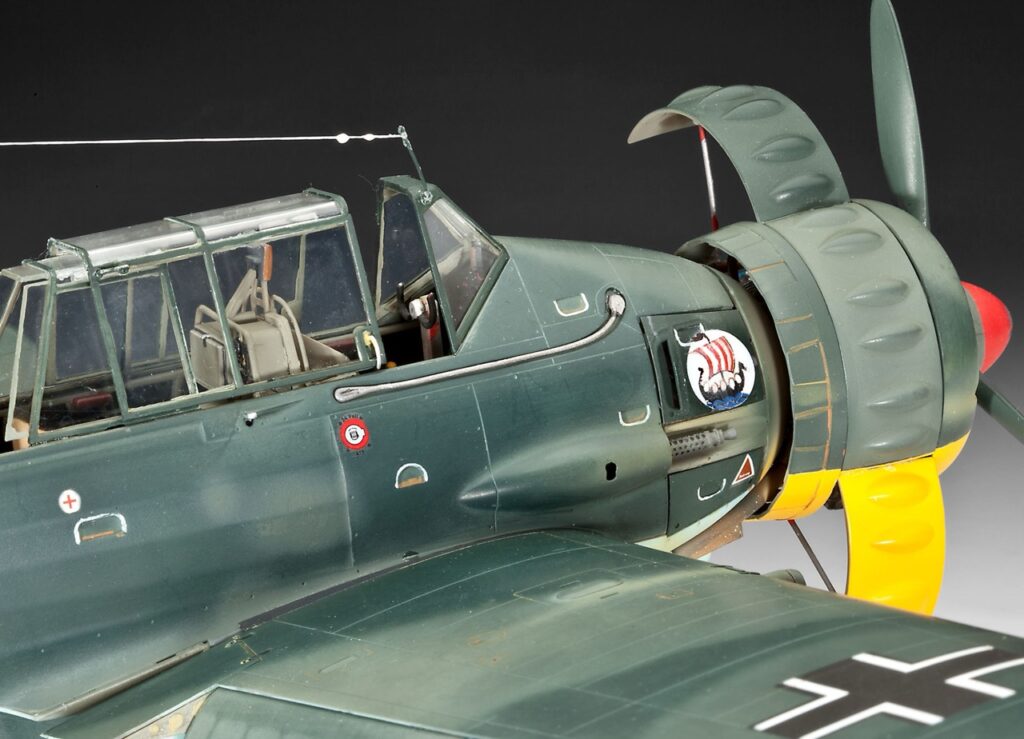
The kit is aimed at modelers aged 13 and older and surprises with exceptionally good fit. A tip: especially the finishing of the floats and weathering effects on the fuselage offer plenty of room for creativity. You can depict the Arado in flight, on a section of a battleship’s railing, or landing ashore— the model always draws attention.
Living History – For Building and Dreaming
The Arado Ar 196A-3 is definitely more than just another German aircraft from World War II. Its history is closely linked with dramatic naval battles, innovative technology, and historic change. If you are interested in demanding scale modeling and value historical authenticity, the Revell kit will immerse you deeply in the world of naval warfare and aircraft technology. Careful research on paint schemes, many authentic decals, and abundant literature give you opportunities to make your model as unique as possible.
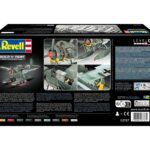
Kit Data at a Glance:
- Scale: 1:32
- Length: 34.6 cm
- Height: 13.9 cm
- Parts: 192
- Age Recommendation: 13 years and older