
The Bismarck is one of those prototypes that model builders accompany across generations, because its myth arises from technology, drama and an extremely short but momentous deployment. When you tackle the Revell Bismarck kit in 1:350 scale (Revell Shop Link), you are not just building a large ship but an entire narrative that ranges from the Kriegsmarine’s power projection to the iconic hunt by the Royal Navy.
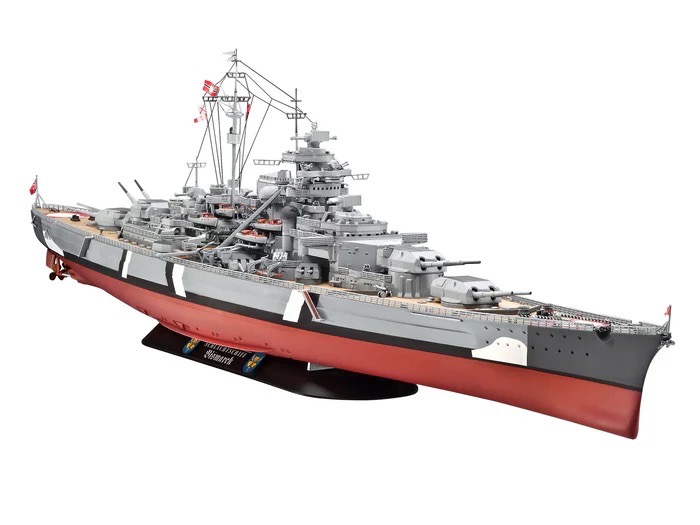
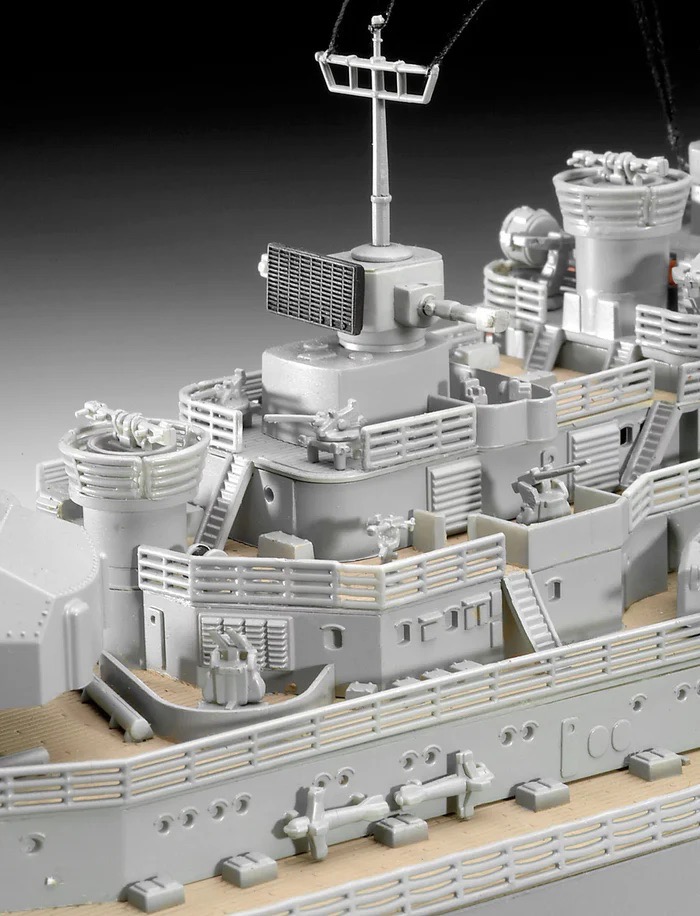
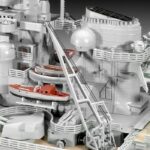
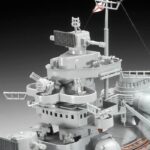
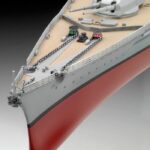
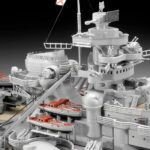
For model building, the Bismarck is also a perennial favourite for this reason, because it provides a perfect stage for different build philosophies. You can present it as a cleanly built showpiece with clear line work or as a credibly weathered combat ship with traces of North Atlantic weather and saltwater. Our kit offers sufficient structure for this through its high parts count and the detailed superstructures, engaging both newcomers to ship modelling and detail fanatics who like to push railings, rigging and small parts to the limit.
The Original and its Reputation as a Giant of its Time
The Bismarck was the most famous German battleship of World War II and became a symbol of the attempt to influence the Battle of the Atlantic with large surface units. Its deployment culminated in Operation Rheinübung, in which the Bismarck, together with the heavy cruiser Prinz Eugen, was to break out into the Atlantic to threaten allied merchant shipping, while direct combat with equally strong opponents was to be avoided if possible.
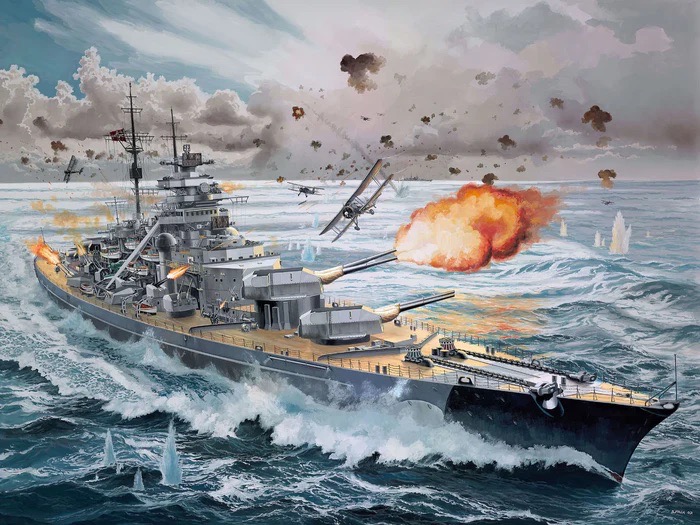
The moment that suddenly cemented the myth was the Battle of the Denmark Strait on 24 May 1941, when the Bismarck was involved in the sinking of HMS Hood. According to the account of Operation Rheinübung, the Hood’s magazines exploded presumably after a hit from a 38 cm shell from the Bismarck, causing the ship to sink within minutes and the entire crew to be lost except for three men. It is precisely this contrast between a split second and strategic shock that almost automatically draws you into historical research during model building, because one rarely looks at the finished model without recounting the events in one’s mind.
Nine Days that Went Down in History
The hunt for the Bismarck is one of the most dramatic episodes in naval warfare history, because it shows how closely reconnaissance, radio traffic, weather and chance are intertwined. Operation Rheinübung ended as early as 27 May 1941 with the sinking of the Bismarck, while Prinz Eugen escaped, which according to the summary of the operation also had strategic consequences, because Germany thereafter placed greater emphasis on U-boats.
After being hit by a British torpedo from the aircraft carrier Ark Royal, the Bismarck was immobilised and confronted by the battleships King George V and Rodney as well as cruisers. Over 90 minutes, the British fired more than 700 shells, destroying the gun turrets and superstructures. The Bismarck fought until scuttling; of 2,221 men, only 115 survived.
For you model builders, there is practical added value here, because you can pin your project to a specific point in time, such as the departure condition, the phase before the Denmark Strait or the days of pursuit. This decision then influences which camouflage you choose, how you assess the dirt level and what mood you want to show in the display, i.e. more parade and power or combat and attrition.
The Bismarck as a Character in Film
It becomes clear in pop culture how strongly the Bismarck acts as a symbol, because there is a feature film that directly deals with the hunt and sinking. The 1960 film Sink the Bismarck! is a British war film based on the book The Last Nine Days of the Bismarck by C. S. Forester and is still considered the only film that directly addresses the operations, pursuit and sinking of the Bismarck.
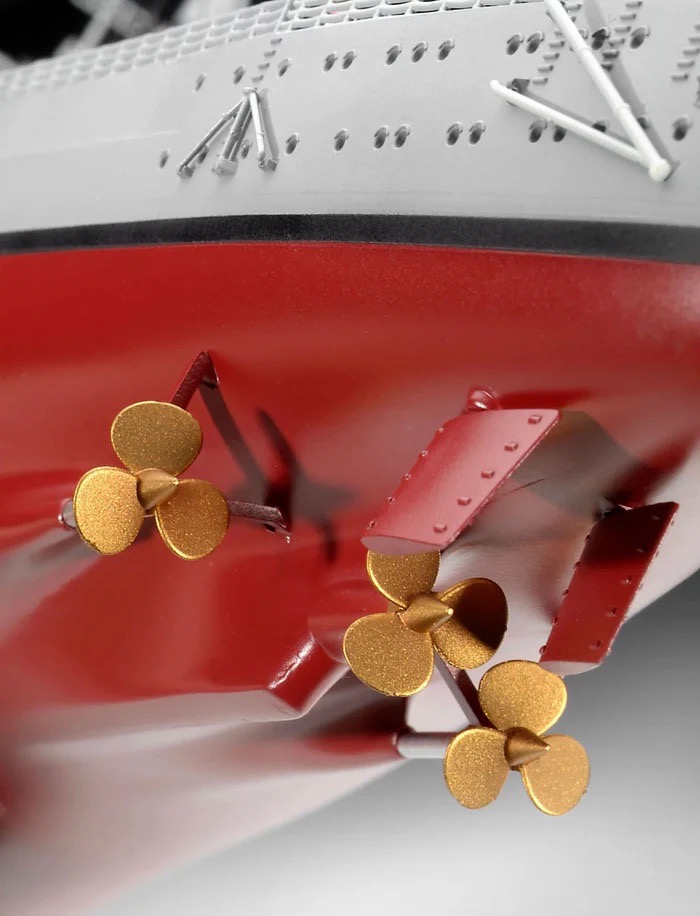
Especially if you plan figures or a small diorama, such a film is a goldmine, because it provides typical image compositions, such as the view from the bridge, chart rooms, radio stations and the way the naval world of that time is staged. Even if not every detail is historically perfect, you get a strong visual language there that can be transferred to a model, for example via a suitable presentation plaque, a small operations map or a maritime base design.
What Makes the Revell Kit Special for You
Our Revell kit is supplied with 659 parts, is in 1:350 scale and results in a model length of 71.8 centimetres, making it a true display case piece. This size is the sweet spot for many, because the Bismarck is large enough for visible details on superstructures and armament, but not yet so huge that you inevitably have to clear out or expand an entire workshop.
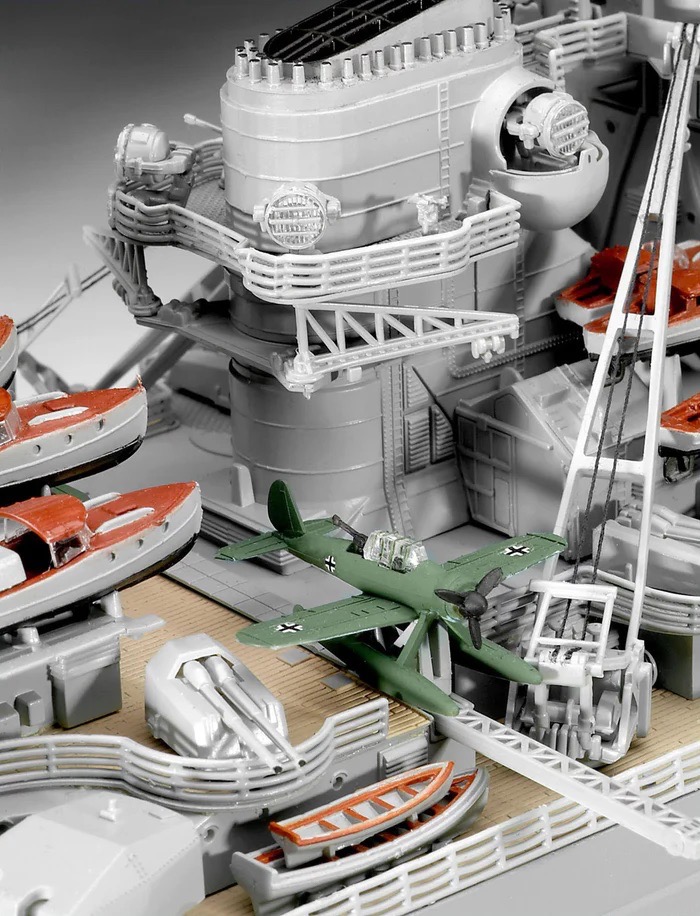
However, the parts count also means that you should treat yourself to a plan, because with 1:350 battleships it is not the individual build step that is difficult, but the sum of repetitions and the consistent keeping of alignments straight. Our model is then ideal if you feel like a project where patience and clean execution count more than quick success, with the superstructures and armament areas in particular benefiting if you take time for edges and transitions.
In terms of content, the option to build markings for two deployment periods also fits the Bismarck theme very well, because many model builders like to seek the moment that tells their personal version, i.e. the condition associated with a particular scene in mind. Anyone who focuses on historical classification can orientate specifically to Operation Rheinübung and thus link the paint job and finish to a concrete date and context instead of deciding purely on optics.
Revell Bismarck kit in 1:350 scale (Revell Shop Link)
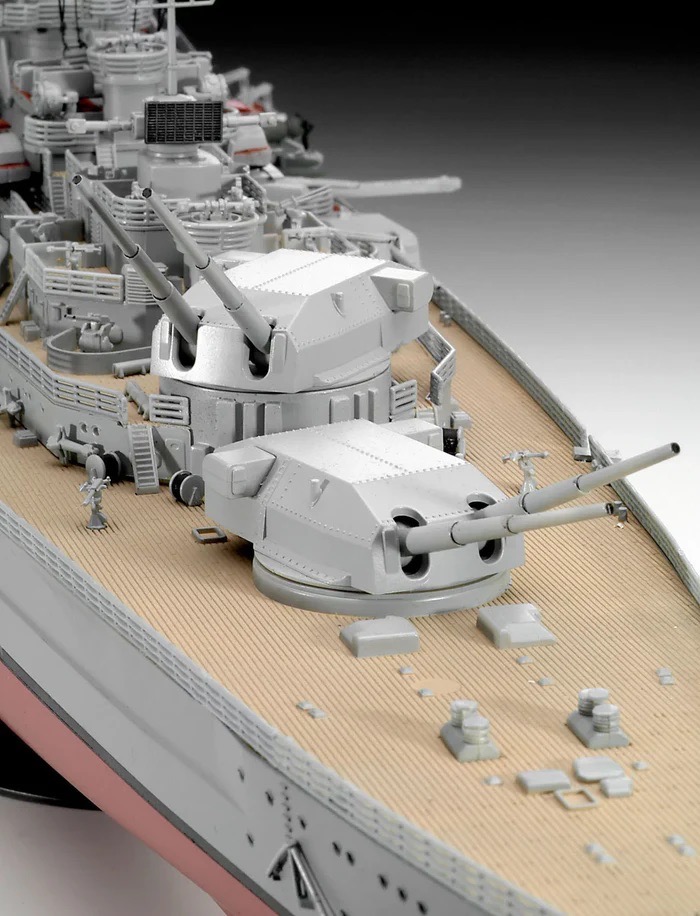
If you are looking for a demanding Level 5 ship that rewards you with size, detail level and one of the most famous stories in naval warfare history, then the Bismarck is a candidate that will not disappoint you, provided you bring time and a steady hand for the long build phases.
Build Inspirations
No legendary military equipment without corresponding documentaries 🙂
How the Bismarck was sunk
In fact, the aforementioned UK film “Sink the Bismarck!” can even be found on YouTube: