
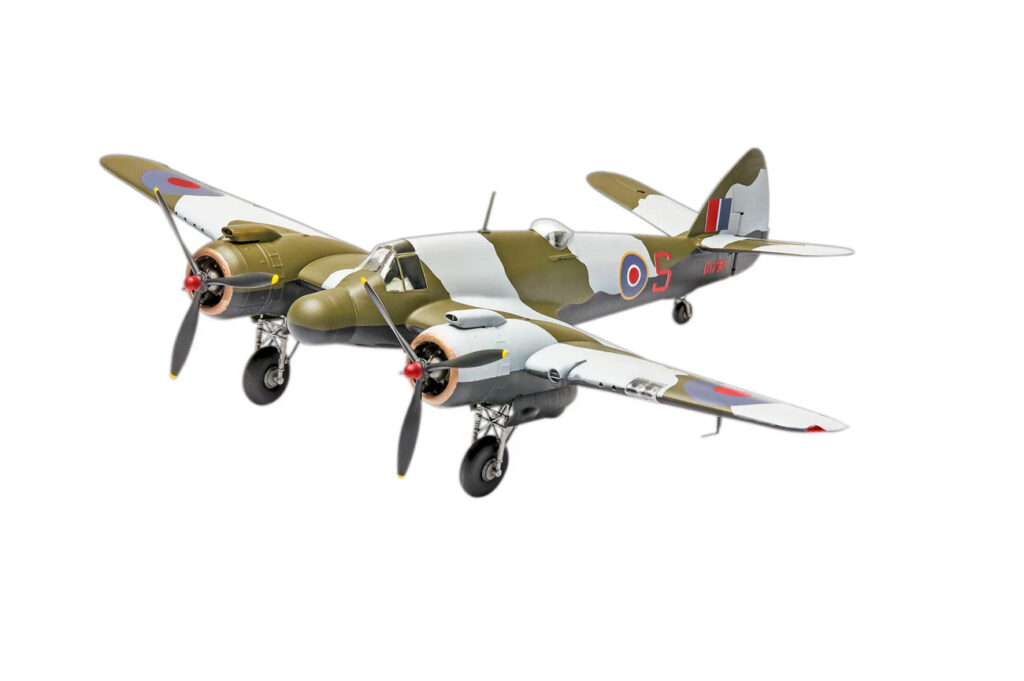
The Bristol Beaufighter Mk. VI is one of the most fascinating and versatile combat aircraft of World War II. For us model builders, our kit offers the opportunity to recreate this legendary British night fighter with exceptional attention to detail and to immerse ourselves in the history of an aircraft that was affectionately called “Beau” by its pilots and feared by enemies.
The Origin Story: Born from Necessity
The Bristol Beaufighter arose in 1938 from a clever emergency solution by the Bristol Aeroplane Company. When it became apparent that the originally planned Beaufort torpedo bomber would face delays, engineers led by Leslie Frise developed a fighter variant based on the same basic design. The result was a heavy twin-engine fighter that would set entirely new standards.
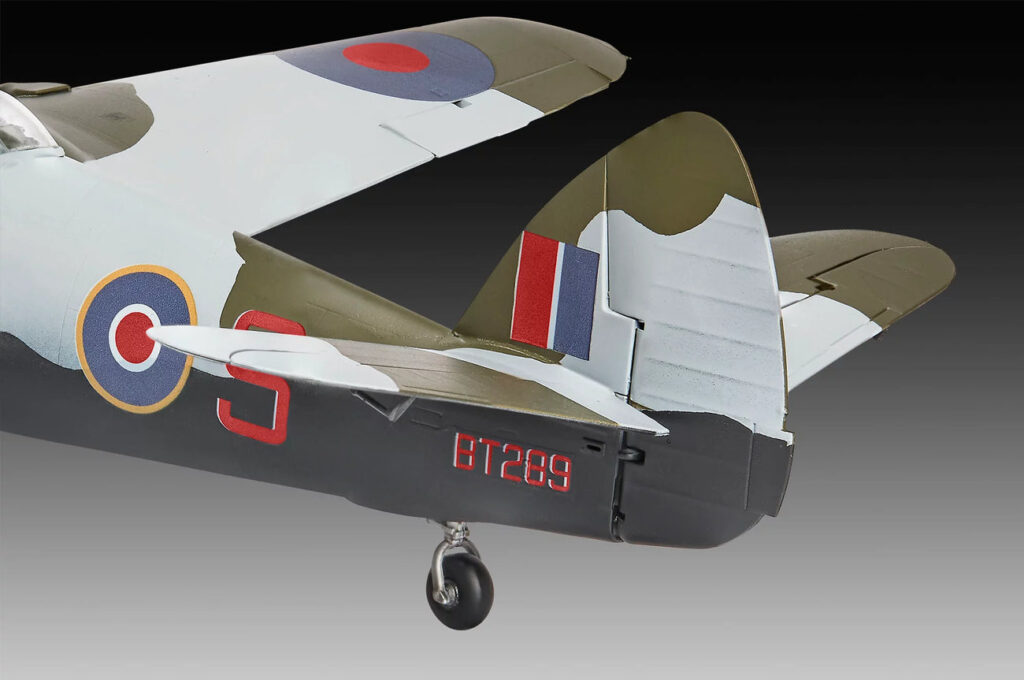
The Mk. VI variant, introduced in 1942, was the result of continuous improvements. Equipped with the powerful Bristol Hercules VI or XVII radial engines, it developed a top speed of over 530 km/h. The characteristic modified tailplane not only gave it its unmistakable silhouette but also crucially improved flight stability and maneuverability.
Technical Innovation and Firepower
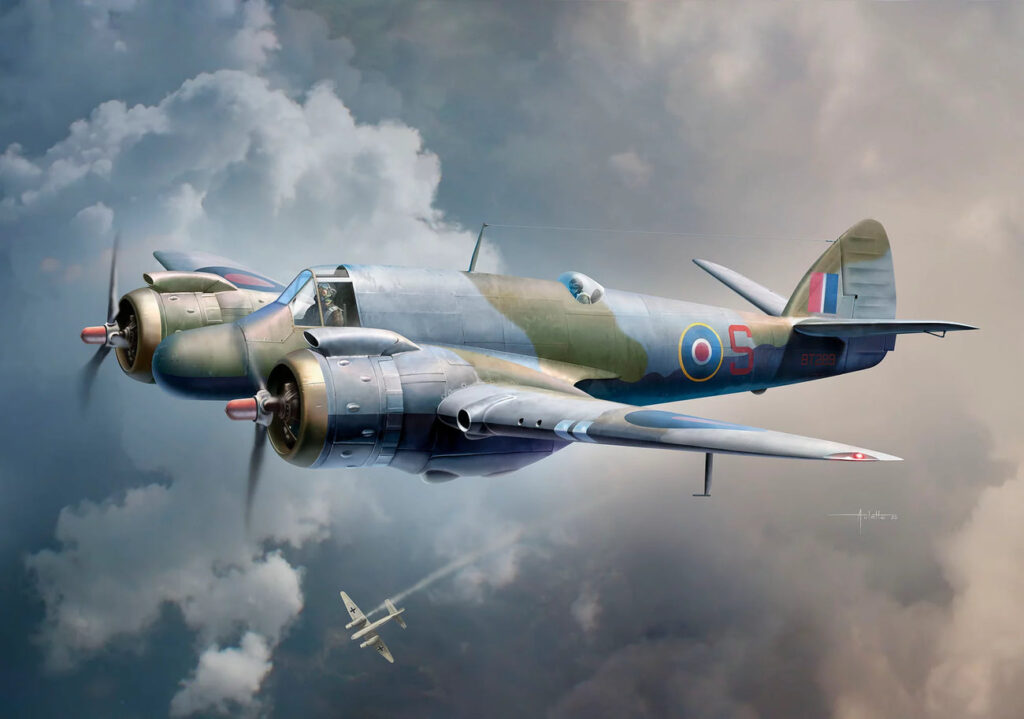
What made the Beaufighter Mk. VI such an impressive combat aircraft was its exceptional armament. Four 20mm Hispano cannons in the nose delivered devastating firepower, supported by six .303 Browning machine guns in the wings. This combination made it one of the most heavily armed fighters of its time.
Technical sophistication was also evident in the equipment with AI Mk IV radar for night fighter variants. This early airborne radar enabled the crew to track and intercept enemy bombers even in total darkness. The characteristic “arrowhead” antenna on the nose became the identifying feature of radar-equipped versions.
Operations Around the Globe
The Beaufighter Mk. VI proved itself in practically all theaters of war during World War II. In the Battle of Britain, it hunted German bombers over the nocturnal skies of Britain. In the Mediterranean, it terrorized German and Italian supply convoys, while it was deployed against Japanese forces in the Pacific.
Particularly noteworthy was its use as a “ship destroyer” in the Mediterranean and off the Norwegian coast. The combination of speed, agility and devastating firepower made it a nightmare for merchant vessels and light warships. German sailors respectfully called it “Whispering Death” because the Hercules engines were barely audible at low altitude.
Heroes of the Air and Their Stories
The Beaufighter wrote countless heroic stories. Wing Commander John Cunningham, known as “Cat’s Eyes” Cunningham, became one of the RAF’s most successful night fighter pilots with the Beaufighter. His successes contributed significantly to the aircraft’s legend and inspired an entire generation of pilots.
A particularly remarkable anecdote occurred in 1943 over the Mediterranean, when a single Beaufighter Mk. VI attacked an entire German convoy and sank three ships before returning unscathed to base. Such stories made the aircraft legendary and shaped the myth of the invincible “Beau”.
RAAF and Commonwealth Operations
The Royal Australian Air Force (RAAF) used the Beaufighter Mk. VI particularly intensively in the Pacific War. Australian squadrons flew attacks against Japanese bases in New Guinea and the Solomon Islands. The aircraft’s ruggedness proved invaluable, as it could often reach its base even when heavily damaged.
RAAF pilots developed particularly innovative tactics for deploying the Beaufighter. They used the high speed and heavy armament for surprise low-level attacks on Japanese airfields and harbor installations. These operations contributed significantly to pushing back Japanese forces in the Pacific region.
Cultural Influence and Media Appearances
The Bristol Beaufighter has also left its mark on popular culture. It played a prominent role in numerous war films of the 1950s and 1960s, although sometimes as a stand-in for other aircraft types. The British film “Angels One Five” from 1952 primarily featured Hurricanes (which we also have fresh in our range), but Beaufighters appeared in several scenes as night fighters.
In literature, the Beaufighter was immortalized in countless war novels and memoirs. Pierre Clostermann’s “The Big Show” in particular contains vivid descriptions of Beaufighter operations that convey to the reader the atmosphere and drama of nocturnal fighter missions.
Technical Challenges of Model Building
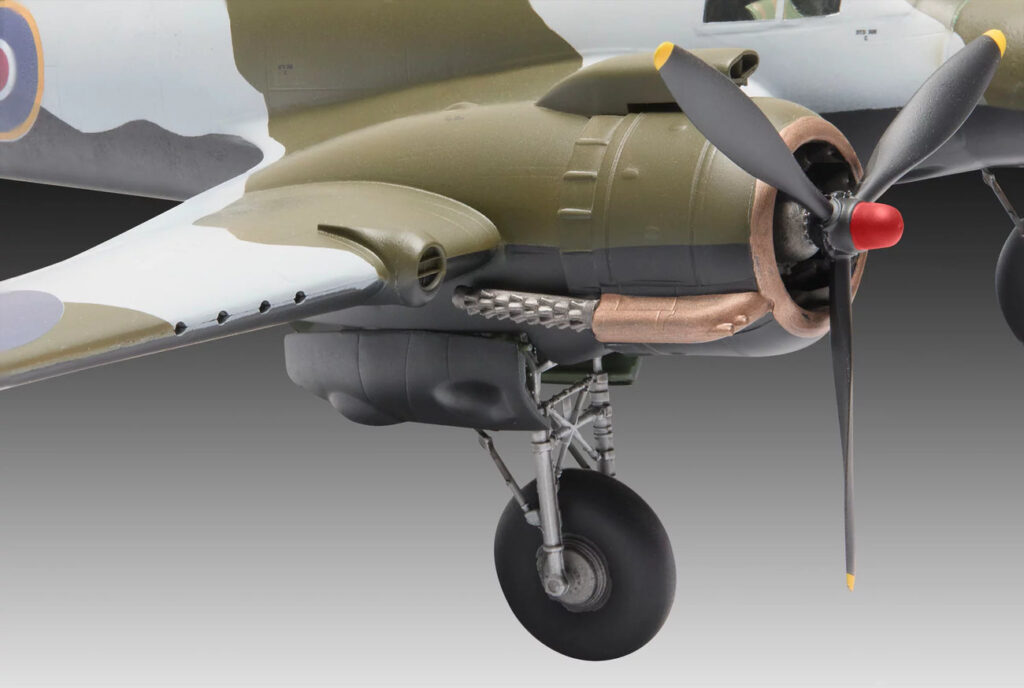
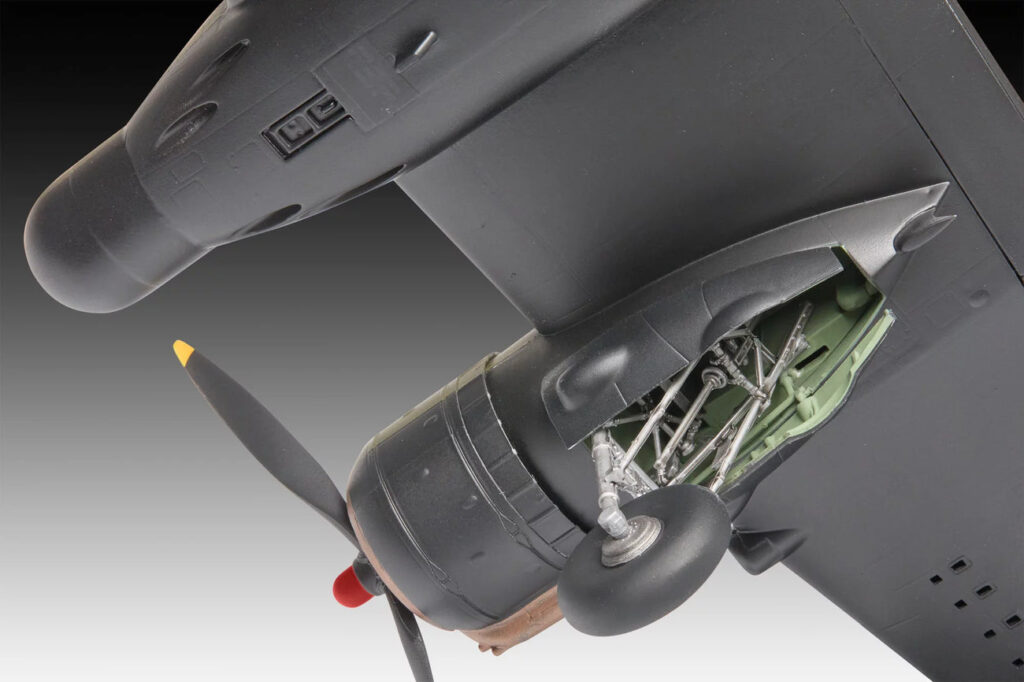
For us model builders, the Beaufighter Mk. VI presents a particularly interesting challenge. The characteristic shape with the massive Hercules radial engines and the distinctive tailplane requires precise work and attention to detail. The complex engine geometry with its numerous cooling fins and lines offers experienced model builders the opportunity to demonstrate their skills.
The Level 5 rating of the Revell kit is well justified, as the 200 individual parts need to be carefully assembled. The delicate Hercules engines in particular require patience and precise work. The reward, however, is a model of exceptional authenticity and fidelity to detail.
Paint Scheme and Markings
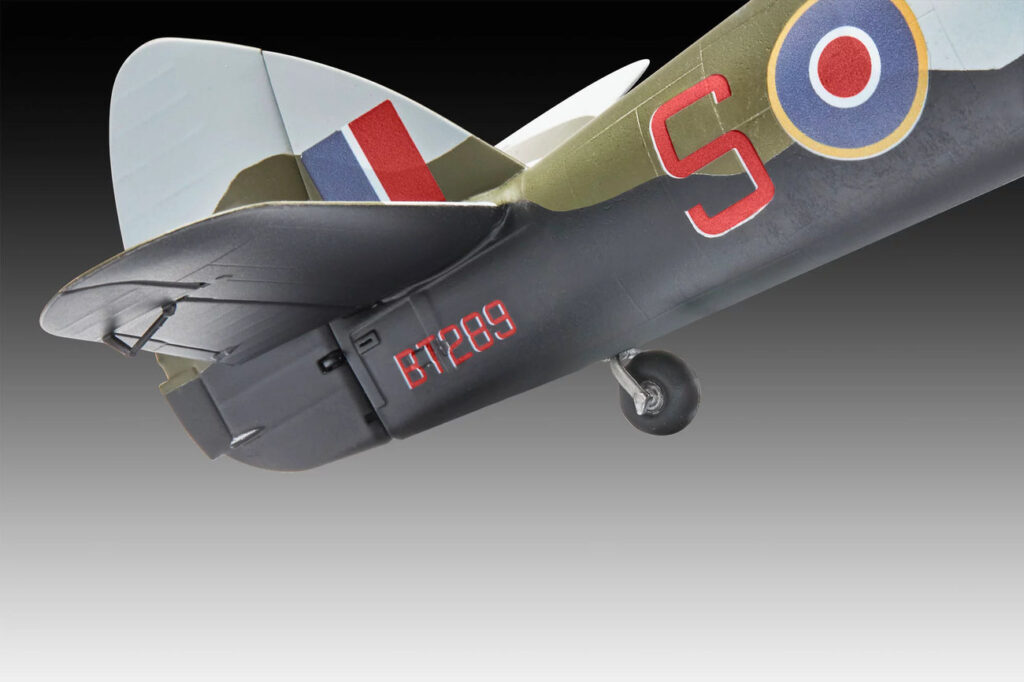
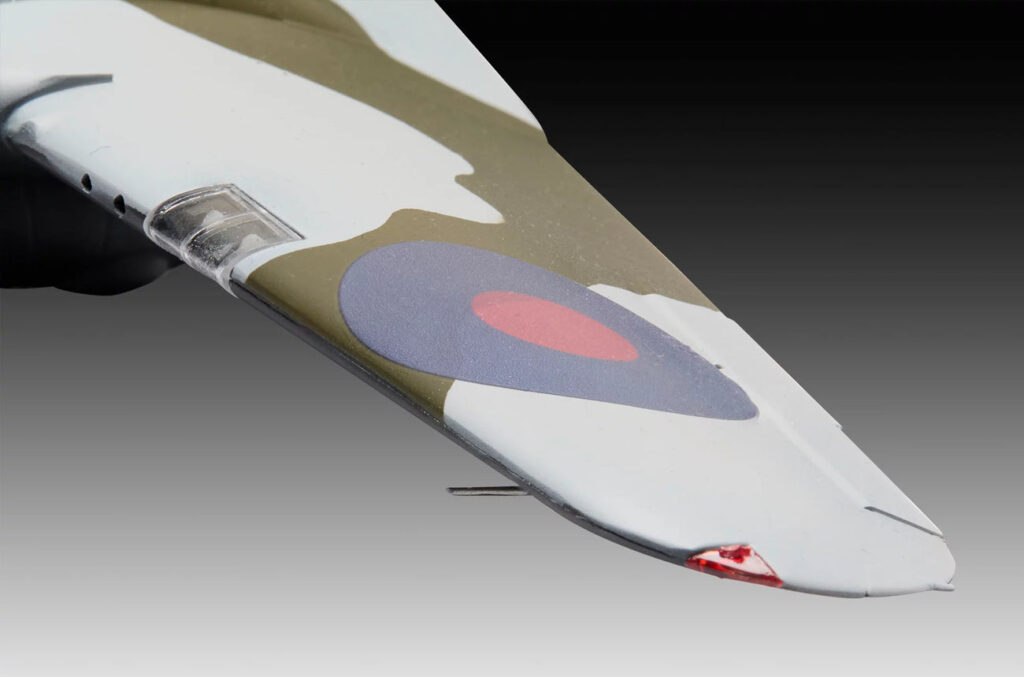
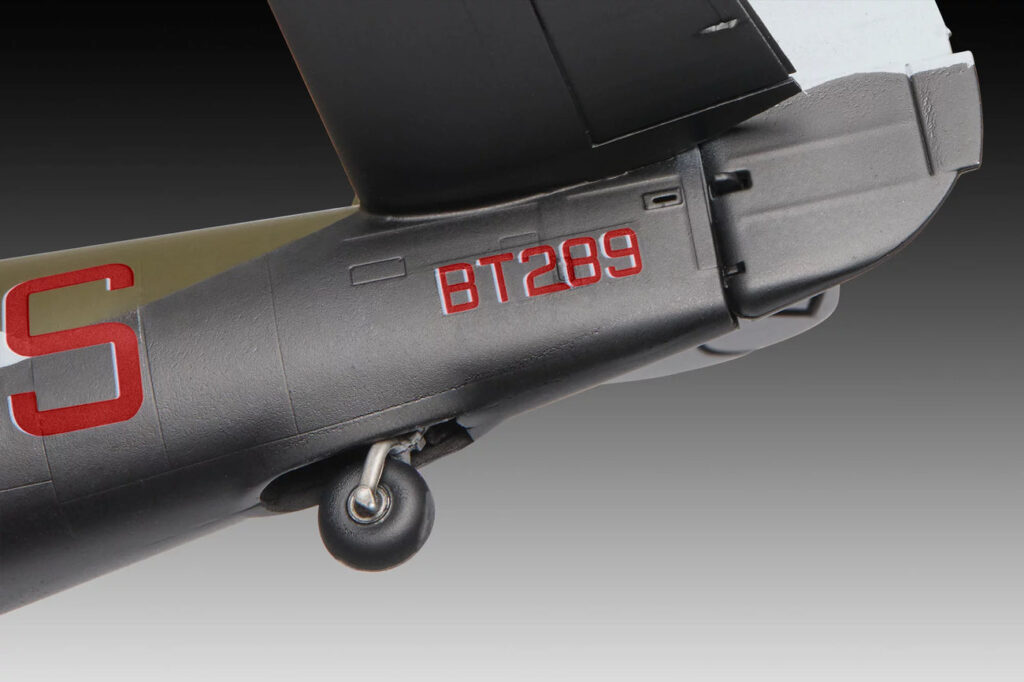
The color scheme of the Beaufighter Mk. VI offers interesting possibilities for creative design. The typical RAF camouflage schemes of the time included Dark Green and Dark Earth on the upper surfaces with Night (black) undersides for night fighter variants. Day fighters often carried the standard scheme with Sky blue undersides.
RAAF aircraft often showed slight variations of these schemes, adapted to operational conditions in the Pacific. Additionally, many aircraft carried individual nose art or squadron markings that can give the model a personal touch.
Post-War Period and Preservation
After the war, the Beaufighter quickly disappeared from active service as jet aircraft made piston-engine fighters obsolete. Today only a few airworthy examples remain, which additionally increases the value of detailed models like the Revell kit. 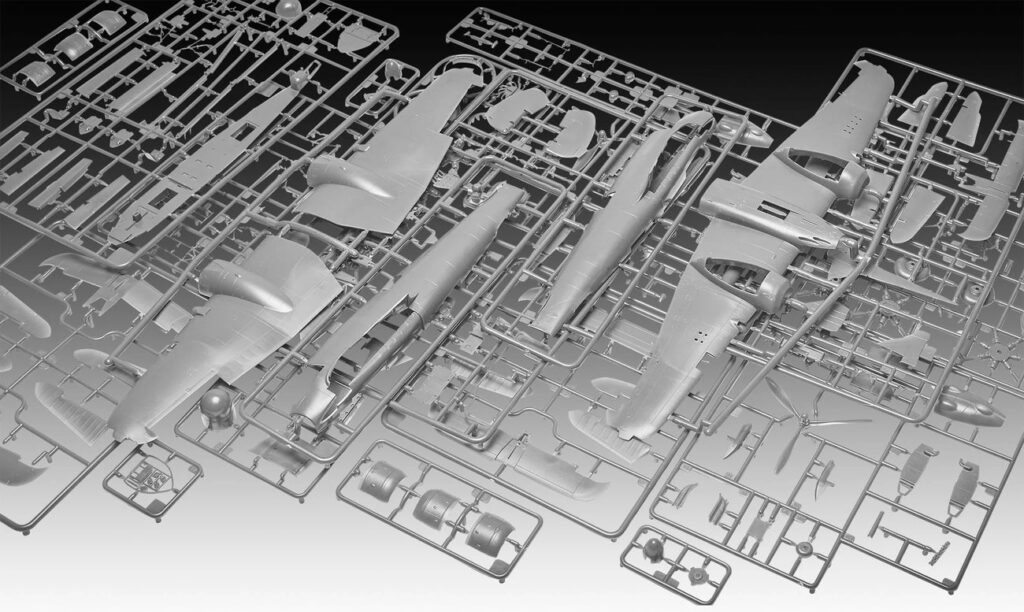
The last airworthy example in Europe is maintained by the Bristol Aerospace Museum and flown on special occasions. For most of us, a precisely built model is the only way to “experience” this historic aircraft up close and appreciate its impressive appearance.
Building Inspirations
Here you’ll find a detailed, four-part presentation on the Bristol Beaufighter and the 417th Nightfighter Squadron with many exciting historical backgrounds
and IsonzoEnjoyer has created a very exciting documentary on the Bristol Beaufighter using the game WarThunder: